
ENGINEERING APPLICATION CASE · BEVERAGE
Beverage Label CO₂ Laser Coding with Inline Vision Verification
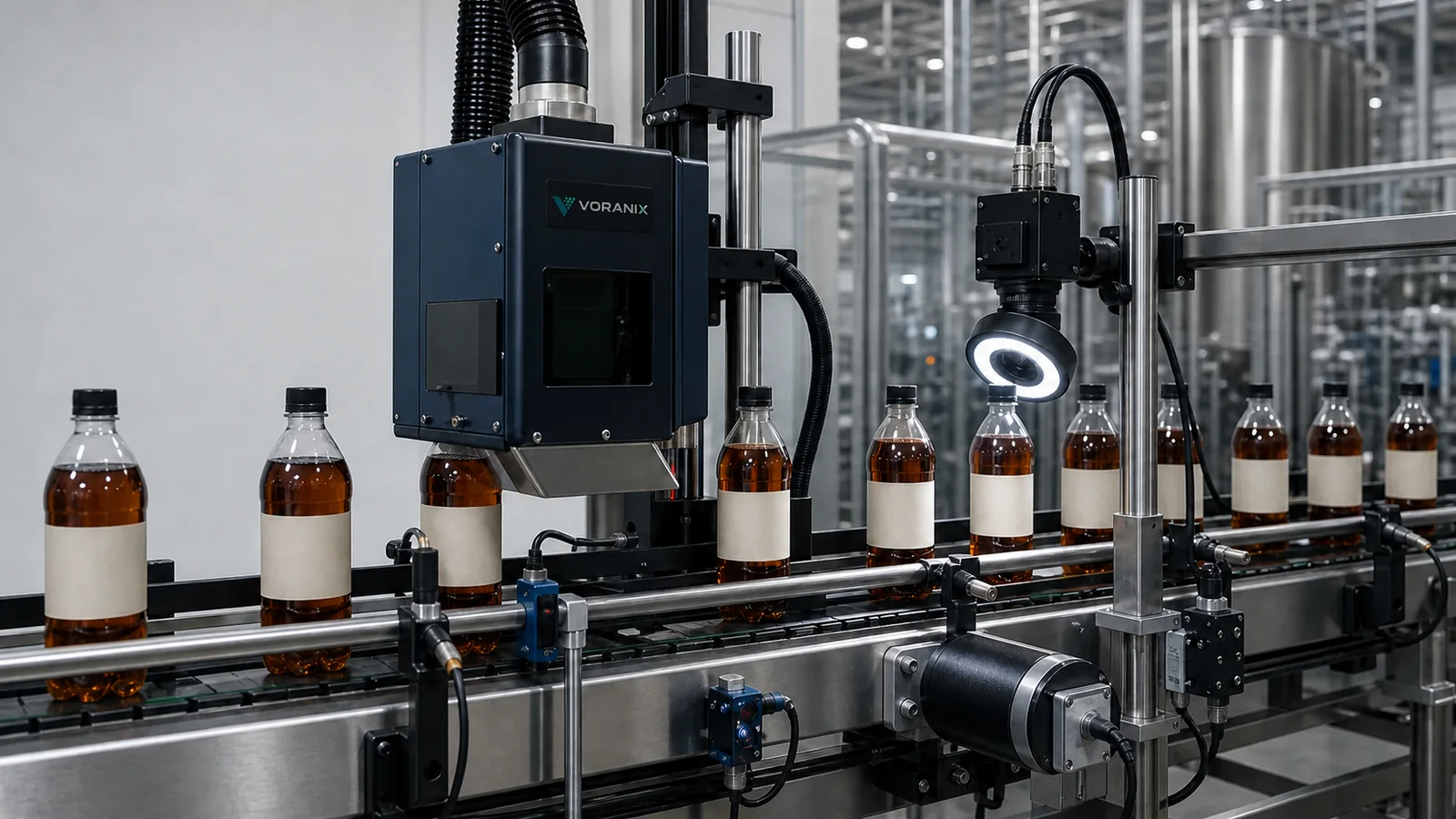
Beverage lines require stable code placement while bottles move through wet, reflective and speed-changing conditions. This concept marks a compatible label with a CO₂ laser and verifies the code downstream.
PRODUCTION CHALLENGE
What the process must control
Label paper, coatings, inks and films respond differently to CO₂ laser energy. Bottles can rotate, vary in pitch or carry condensation, and high-gloss labels complicate inspection. A feasible design must stabilise the marking field, control extraction and confirm that the code remains inside the approved label artwork.
PRODUCT, PACKAGING & SUBSTRATE
Inputs required before equipment selection
- Confirm label face stock, coating, ink layers, adhesive, supplier and approved mark window.
- Provide bottle shape, conveyor height, pitch range, orientation control and speed profile.
- Define the exact date, batch and line data plus changeover and message-approval rules.
- Identify washdown, condensation, extraction, guarding and laser-safety requirements.
ACCEPTANCE CONDITIONS
Define success before trials
- Acceptable contrast without burning through, delaminating or distorting the approved label
- Code position remains inside the artwork window over bottle and label variation
- Extraction captures process fumes under the agreed operating conditions
- Vision checks the defined presence, content and location conditions
A / B / C SOLUTION PATH
Choose the required control level
The recommended level is provisional. A VORANIX engineer must review samples, code data, line conditions, inspection criteria and system boundaries before quotation.
A. Standalone laser coding
CO₂ laser, controller, mounting, guarding, extraction, product detection and approved message templates.
Discuss this option → Recommended provisional levelB. Code and verify
Add bottle handling or timing control, dedicated lighting, camera and tracked alarm or reject response.
Discuss this option →C. Line data integration
Add authorised job data, line selection, event records and scoped PLC, line-management or MES interfaces.
Discuss this option →PROVISIONAL CONFIGURATION
Recommended engineering concept
For the stated risk profile, begin with a mark-or-print and verify concept, then add traceability functions only where the data owner and recovery rules are defined.
- CO₂ laser wavelength and optical configuration selected through real-label testing
- Rigid mounting, product sensor and encoder or line-speed input
- Laser-safe guarding and extraction sized for the approved label process
- Vision camera positioned after the label and bottle have stabilised
- Changeover recipe joining bottle format, code layout and inspection task
INTEGRATION BOUNDARY
Responsibilities to agree at project start
VORANIX scope
- Laser selection, optics, controller, guarding concept and extraction interface
- Triggering, encoder, camera, lighting and inspection logic
- Sample trials and scoped integration documentation
Customer / line-owner scope
- Production labels, bottles, artwork approval and material declarations
- Conveyor access, bottle control, utilities and upstream/downstream coordination
- Final code, food-packaging, environmental and production acceptance
VALIDATION PLAN
From sample to production acceptance
Screen candidate settings on real labels across normal material variation.
Check contrast, edge definition, label integrity and fume behaviour.
Challenge bottle pitch, rotation, condensation and line-speed transitions.
Verify code inspection, reject tracking, changeover and fault-recovery behaviour.
DESIGN TARGETS — NOT CLAIMED RESULTS
What the validated system should be designed to achieve
- Consumable-free coding on approved label materials
- Controlled code position through product tracking
- Effective fume extraction and laser guarding
- Objective downstream inspection of agreed defects
RELATED EQUIPMENT
Build the application around the process
FAQ
Engineering questions
Can a CO2 laser mark every beverage label?
No. Face stock, coating, ink and colour affect the response. Representative labels must be tested before equipment and settings are approved.
Is a visible laser beam required for coding?
No. The production beam is enclosed by the safety concept. Any visible guide light is for setup and is not evidence of marking performance.
Can the camera read codes on glossy or wet labels?
Often, but only with the right geometry and lighting. Condensation, glare and bottle rotation should be included in the validation set.
ENGINEERING REVIEW
Turn this application concept into a line-specific proposal
Send product samples, substrate details, code content, line speed, environment, inspection criteria and data interfaces. VORANIX will prepare two or three provisional solution paths.